




Accounts in One Logo
Tagline text reading 'e-Invoice made simple' promoting easy and streamlined e-Invoicing solutions
Accounts in One Logo

LHDN Compliance Requirements & Grace Periods

Which Phase Are You In? And What’s Your Real Deadline?

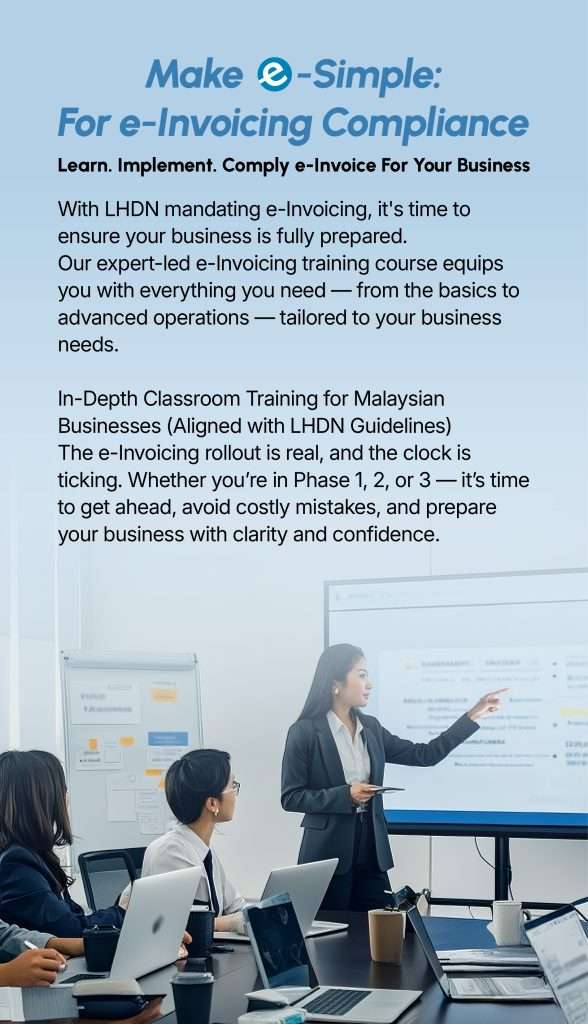
Most businesses already know which phase they fall under for LHDN’s e-Invoicing rollout — Phase 1, 2, or 3. However, a common and risky habit we’ve seen is treating the grace period as extra time to delay, rather than a critical opportunity to prepare.

This often leads to last-minute stress and rejected invoices. When the grace period is over, continuing to issue invoices the same old way can result in serious consequences. This isn’t just about compliance — it’s a habit that can trigger LHDN audits, leading to penalties for non-compliance.

What Early Adopters Wish They Knew?

We’ve worked with businesses that were among the early adopters of e-Invoicing,
and we’ve seen the pitfalls firsthand.

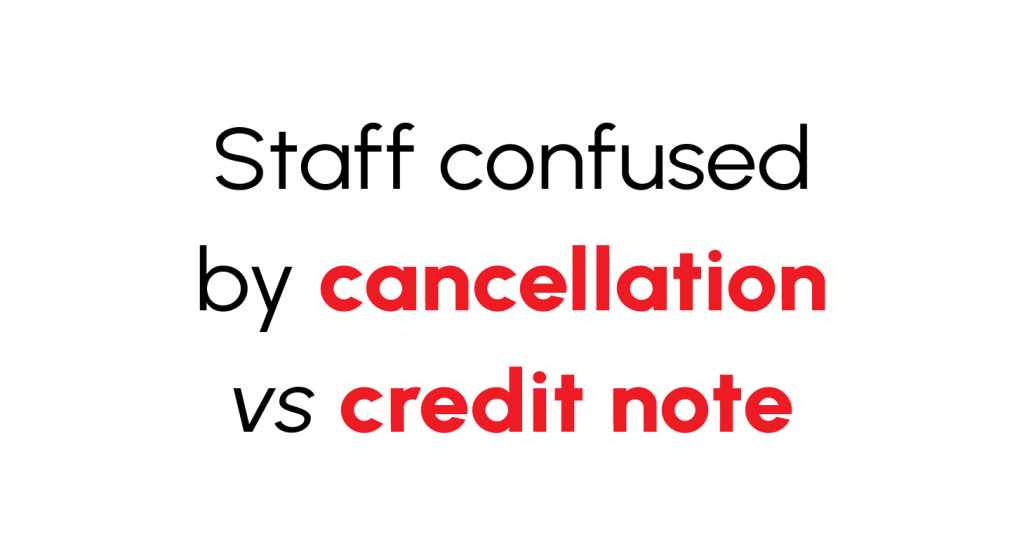
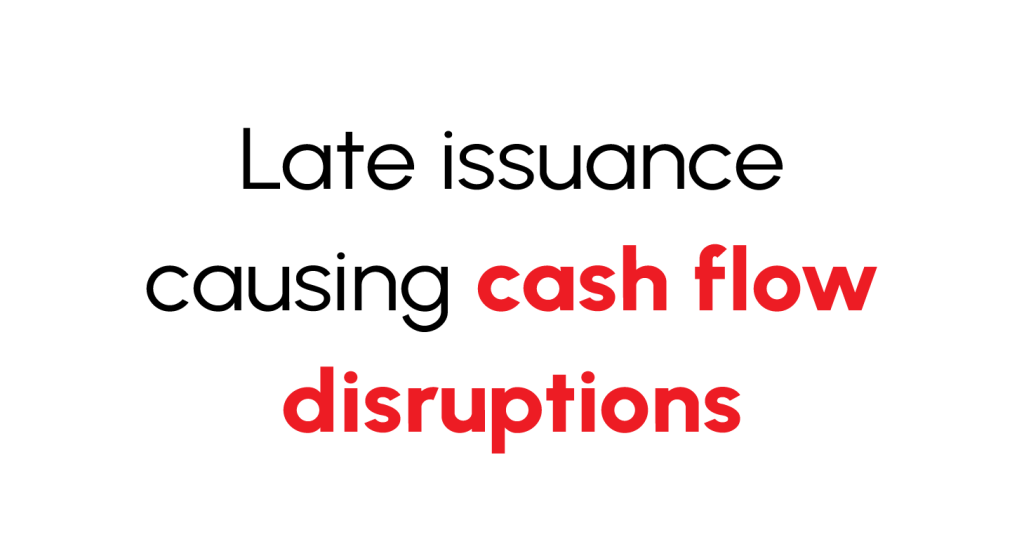
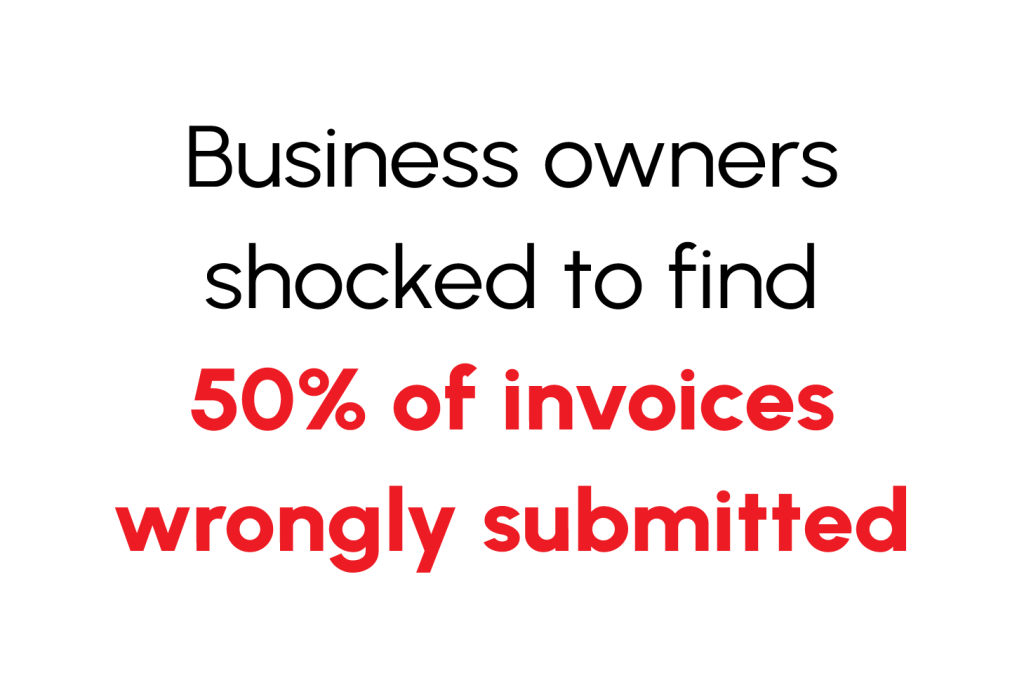
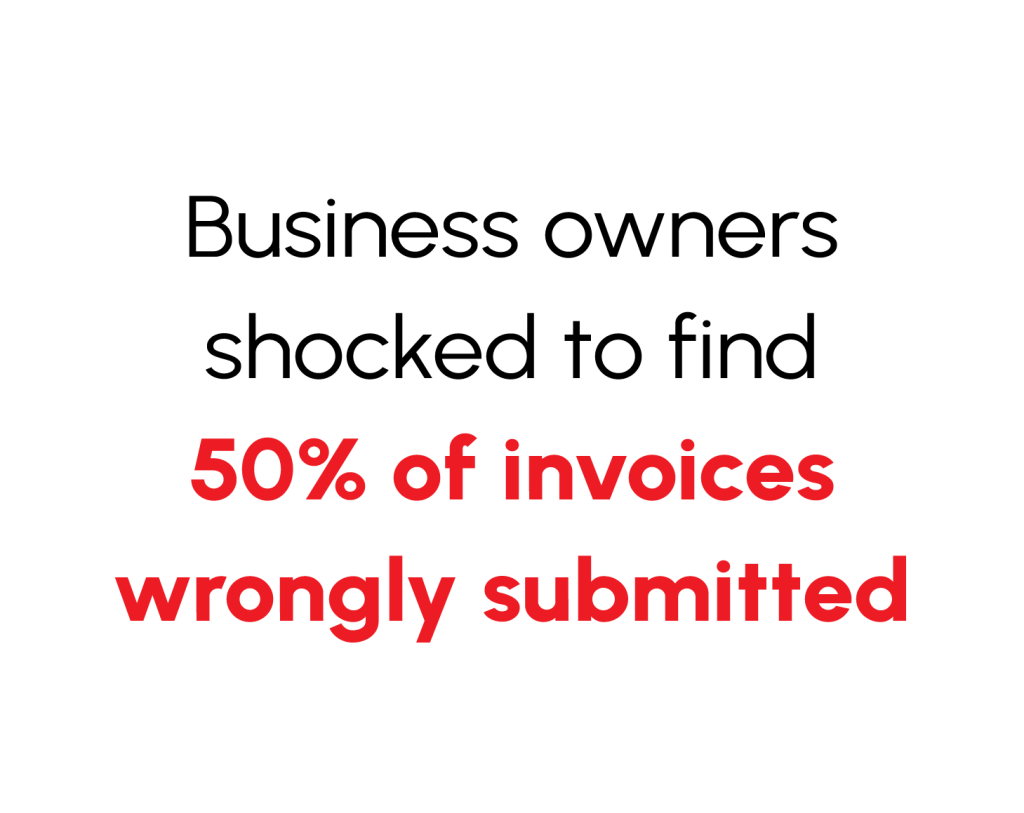
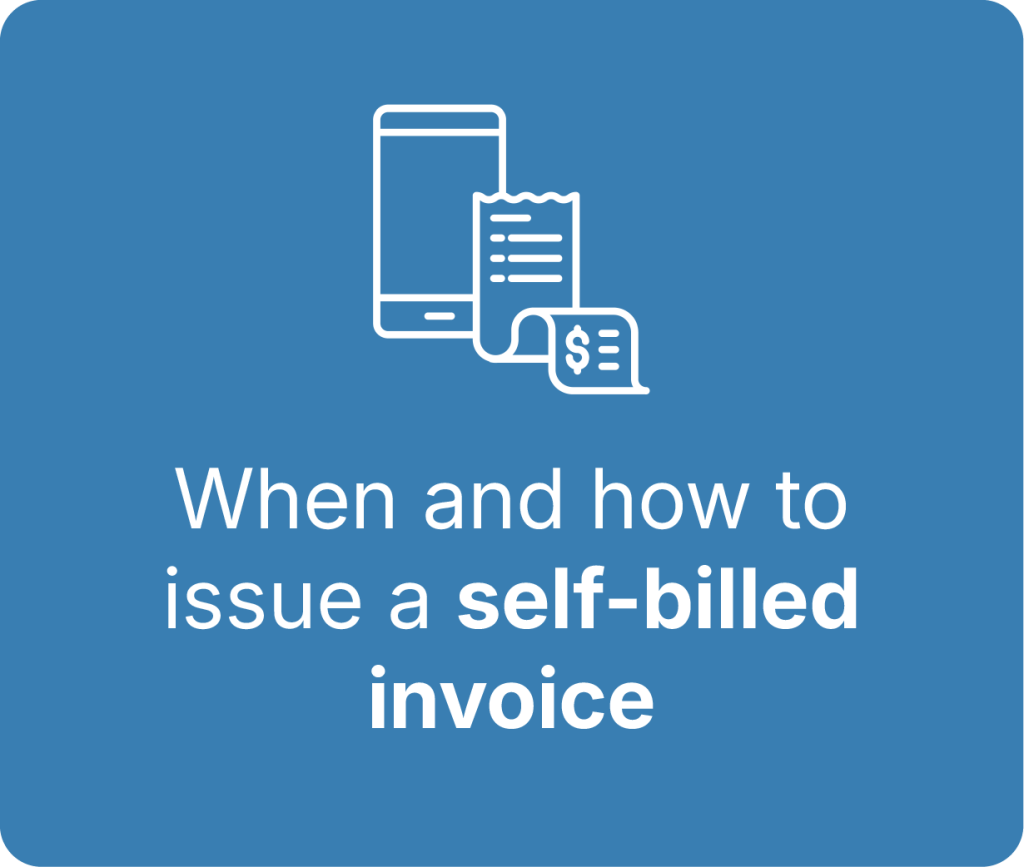
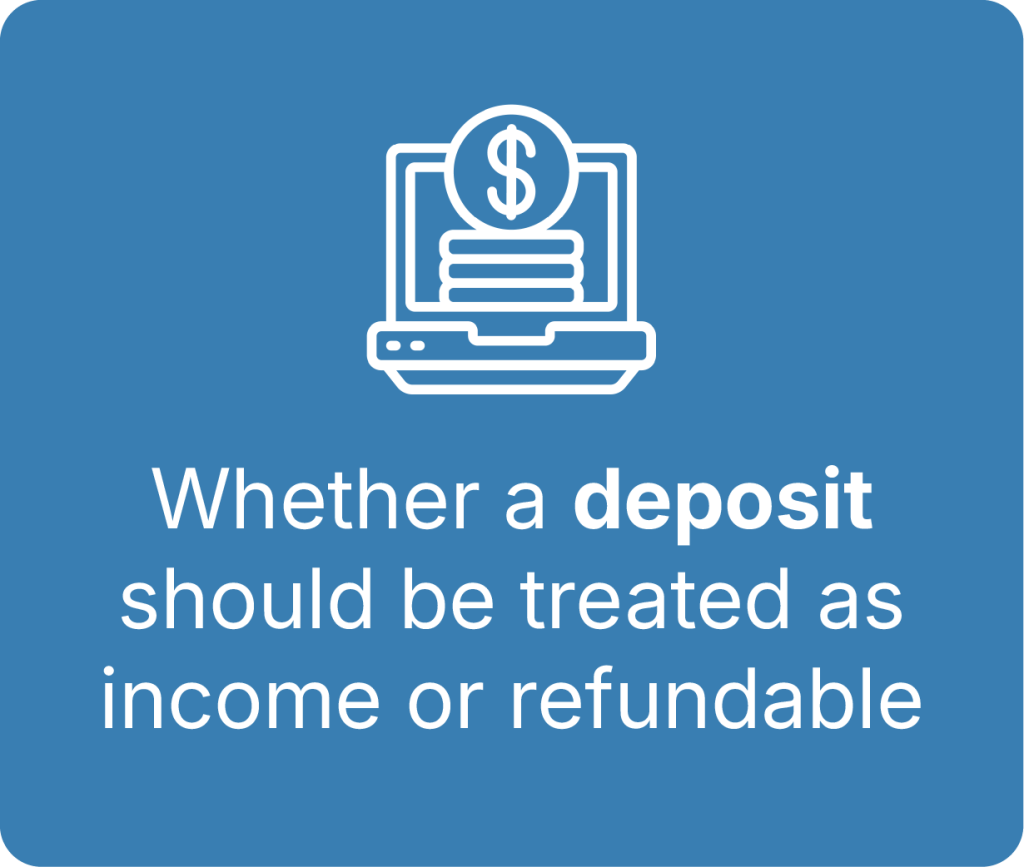
Real case studies include:

We’ll walk you through what happened, why it happened, and how to avoid the
same mistakes in your company with real case studies.

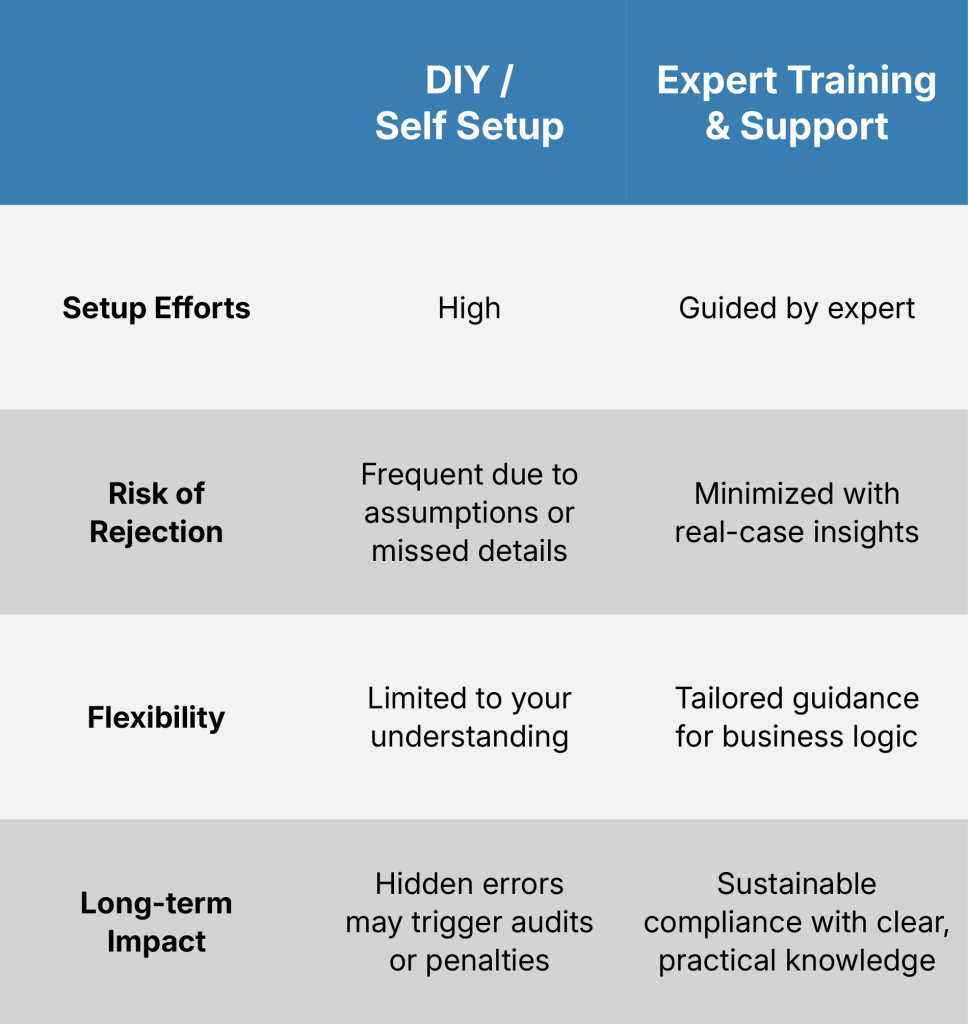
DIY Setup vs Software Support

DIY / Self Setup Expert Training & Support
Setup Efforts
High
Guided by expert
Risk of Rejection
Frequent due to assumptions or missed details
Minimized with real-case insights
Flexibility
Limited to your understanding
Tailored guidance for business logic
Long-term Impact
Hidden errors may trigger audits or penalties
Sustainable compliance with clear, practical knowledge

Software is a tool — not a solution.

It won’t interpret laws or flag business-specific risks.
That’s where real training makes a difference.

What Happens After You Submit Your e-Invoicing?

Many businesses assume that once an e-Invoice is submitted to MyInvois, the job is done.
✅ Submit and move on, right?

WRONG!

That’s just the beginning — and this misunderstanding is where
most early adopters start getting into trouble.

Why Software Alone Isn’t Enough?

Many SMEs assume their accounting software can “handle everything.”
But when it comes to real-world e-Invoicing, that assumption can be costly.

Here's the REALITY:

🧩 Software cannot make judgment calls — especially in complex or grey-area scenarios.
It won’t guide you on:

That’s where our training makes the difference.

We focus on what software can’t teach you
— H
uman Understanding of Compliance:

  • How LHDN interprets different types of transactions
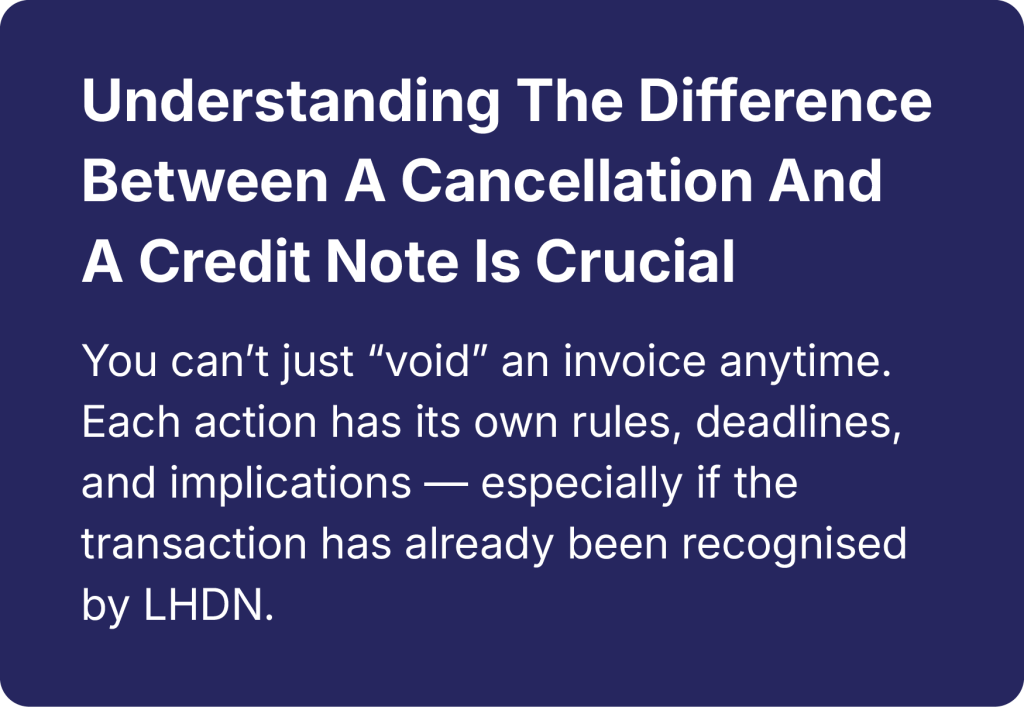
  • How to resolve common rejection or cancellation issues
  • Real-world case studies from businesses just like yours
Software is just a tool. Knowing how to use it correctly — in line with LHDN guidelines — is where the real value lies.

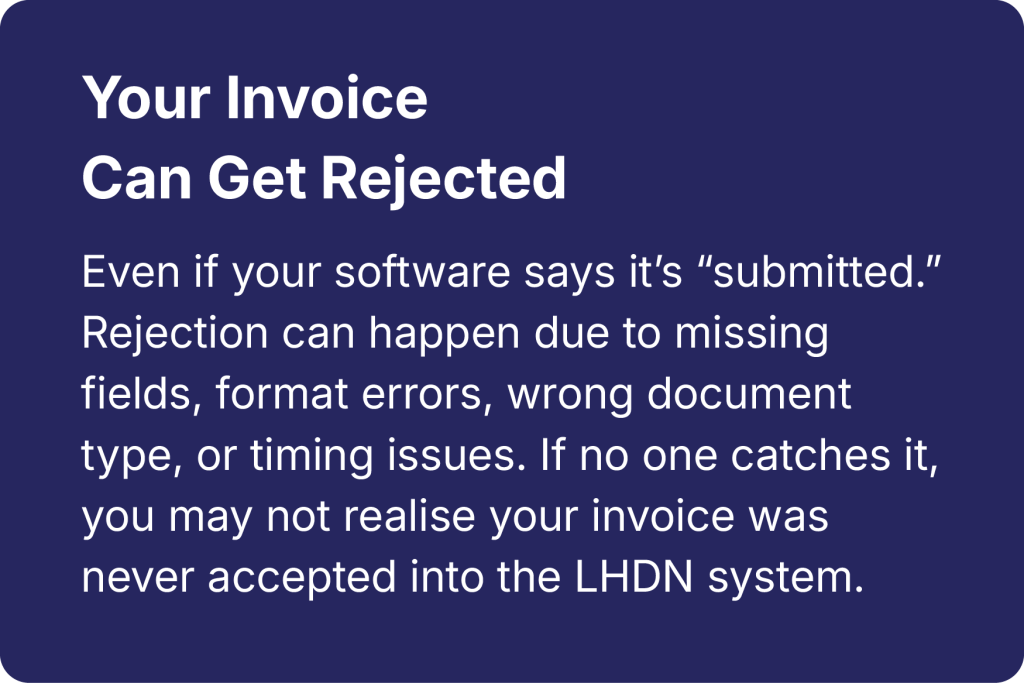
When you submit an invoice to LHDN, it doesn’t mean it’s instantly accepted.

There are real cases where invoices get rejected due to technical errors, wrong classification (B2B vs B2C),
or issues with customer details.

If your team isn’t trained to spot and correct these errors, they may keep repeating the same mistake
— again and again — during the grace period.

And when the grace period ends?
That’s when LHDN starts checking, and that’s when penalties may apply.

Here’s what you need to know:

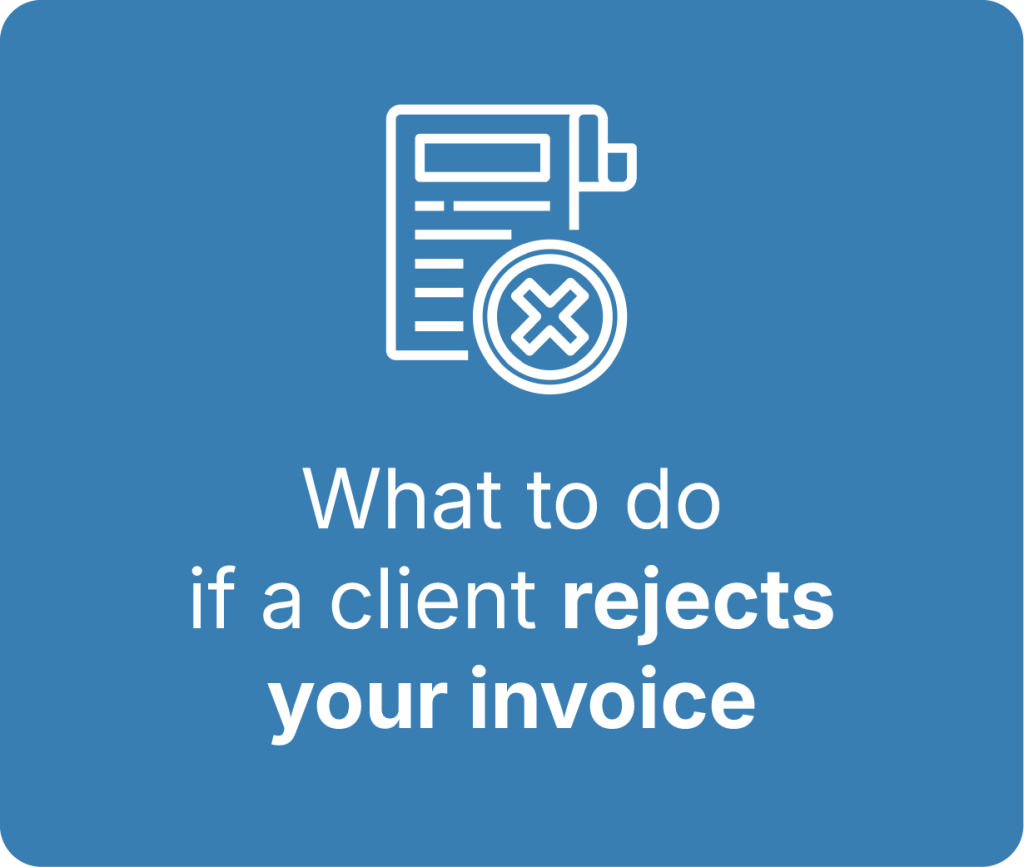
What If Your Client Rejects Your Invoice?

Yes, that happens too. If the recipient doesn’t accept the invoice or disputes the content, it creates further
downstream issues — especially if your team has already closed the books or reported the revenue.

Because e-Invoicing doesn’t just affect your accounts department.
It can impact:

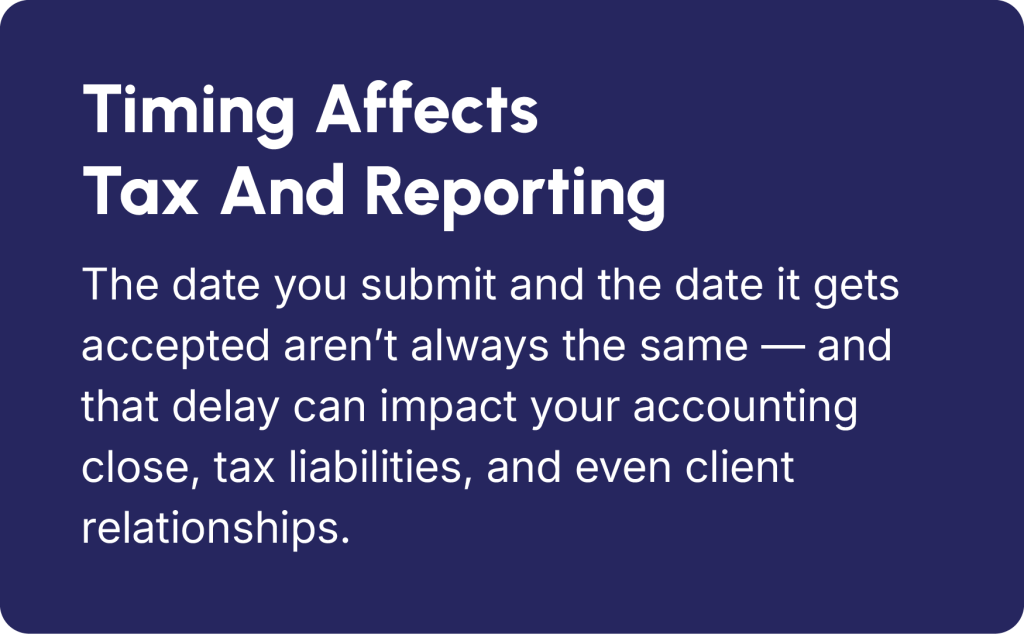
Tax Reporting
& Supporting
Documentation

How do you prove a discount?
A rejected item?
A claimable expense?

Procurement And
Sales Cycles

What happens when
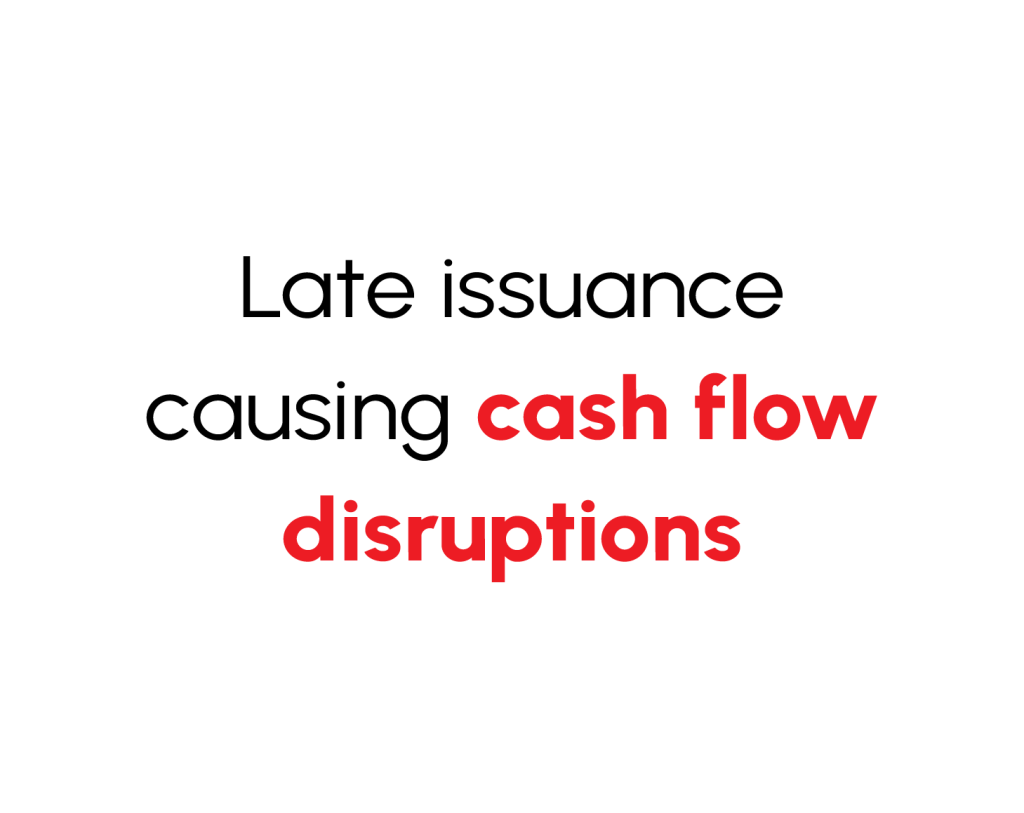
a vendor invoice arrives late
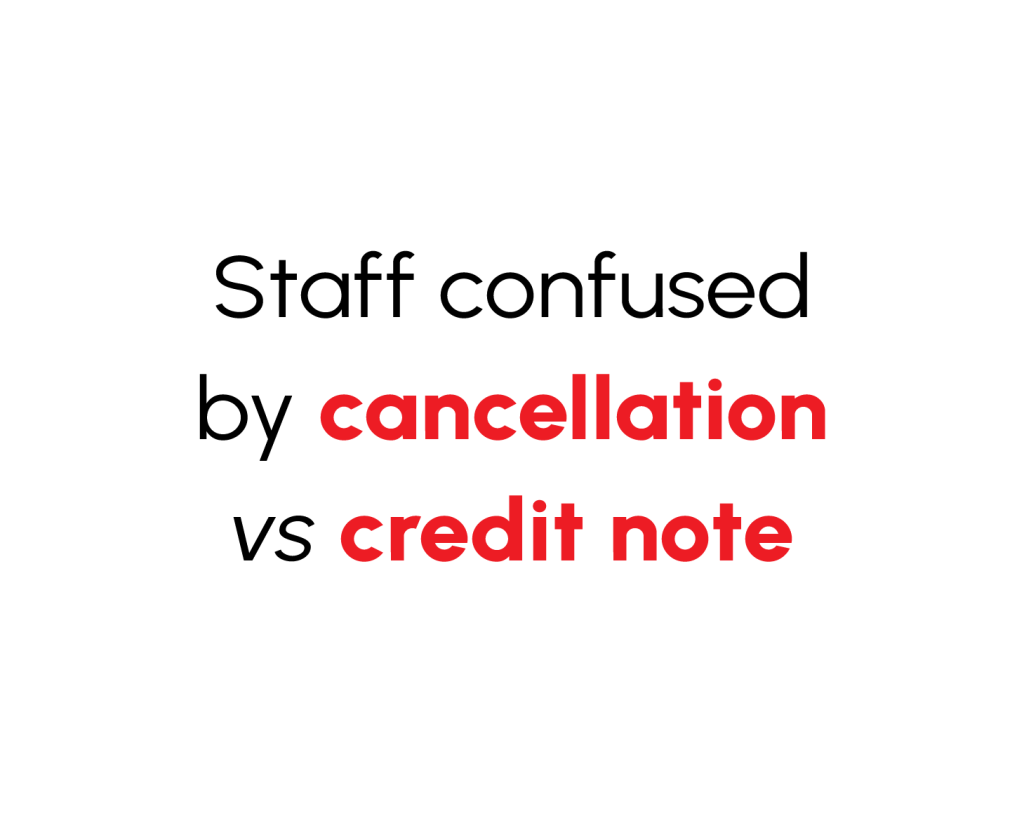
or a customer cancels
after issuance?

HR Policies
& Staff
Reimbursement

For B2C transactions,
especially staff claims, how
will you handle documentation
and compliance?

Many companies are learning the hard way: Your Software Can’t Think For You.
It won’t automatically know how to apply the law in unique business scenarios
— especially those that fall into grey areas.

That’s why our training focuses on more than just the “steps.”

We help you understand how the law applies across different departments, how to interpret
grey areas, and how to make the right call when the system doesn’t guide you.

Why Do We Do Small Group Classroom Training?

Tired of Fast-Paced, Generic Webinars? You’re Not Alone.

We’ve tested both formats — and the difference is clear:
When it comes to mastering e-Invoicing, classroom training works better. Period.

Let’s be honest — most online sessions:

  • Move too fast for proper understanding
  • Give one-size-fits-all explanations
  • Don’t allow space for your real questions

Here’s what you get in our small group classroom training:

Meet Your Trainer

Real Experience. Real Answers.

Our trainer brings 25+ years of experience in:

  • Human Resources
  • Accounting & Finance
  • Taxation
  • Digital Transformation

She’s not here to read slides. They’re here to
Connect The Dots between law, business logic,
and technology, so you leave knowing how to
apply what you learned, confidently.

Who Should Attend an e-Invoicing Course?

We’re not here to oversell or fill up seats for the sake of numbers. We are here to help you send the right people,
the ones who will actually make implementation smoother for your company.

MUST Attend:

These roles are directly involved with e-Invoice issuance, submission, and correction. They need a deep understanding of processes, compliance risks, and how to respond to LHDN requirements.

  • Accounts & Finance Team
    Responsible for invoice accuracy, reporting, and
    ensuring submissions align with tax laws.
  • Operations / Billing Staff
    Anyone involved in issuing, processing, or managing
    invoices must understand the end-to-end flow,
    including what can and cannot be included.

Strongly Recommended:

These roles don’t always handle the system directly, but they
are critical to successful rollout and cross-department coordination.

  • Business Owners / Directors (if hands-on)
    Especially important for SMEs or family-run businesses
    where decisions and reviews are handled at the top.


  • Department Heads or Key Decision Makers
    If your role involves approving SOPs, setting policy,
    or managing vendor/client relationships, you need to understand how e-Invoice will impact operations
    beyond accounting.

The Most Important Factor?

Send someone who can absorb the information, ask the right questions,
and later
brief your internal team with clarity and confidence.

This is not just about attending, it’s about bringing back value.

Q&A: Real Answers to Real Questions

Not Just A Generic Guidelines

In large webinars or online courses, the Q&A segment is often rushed or skipped entirely. But in our small-group sessions, your questions are not an afterthought, they are a core part of the learning experience.

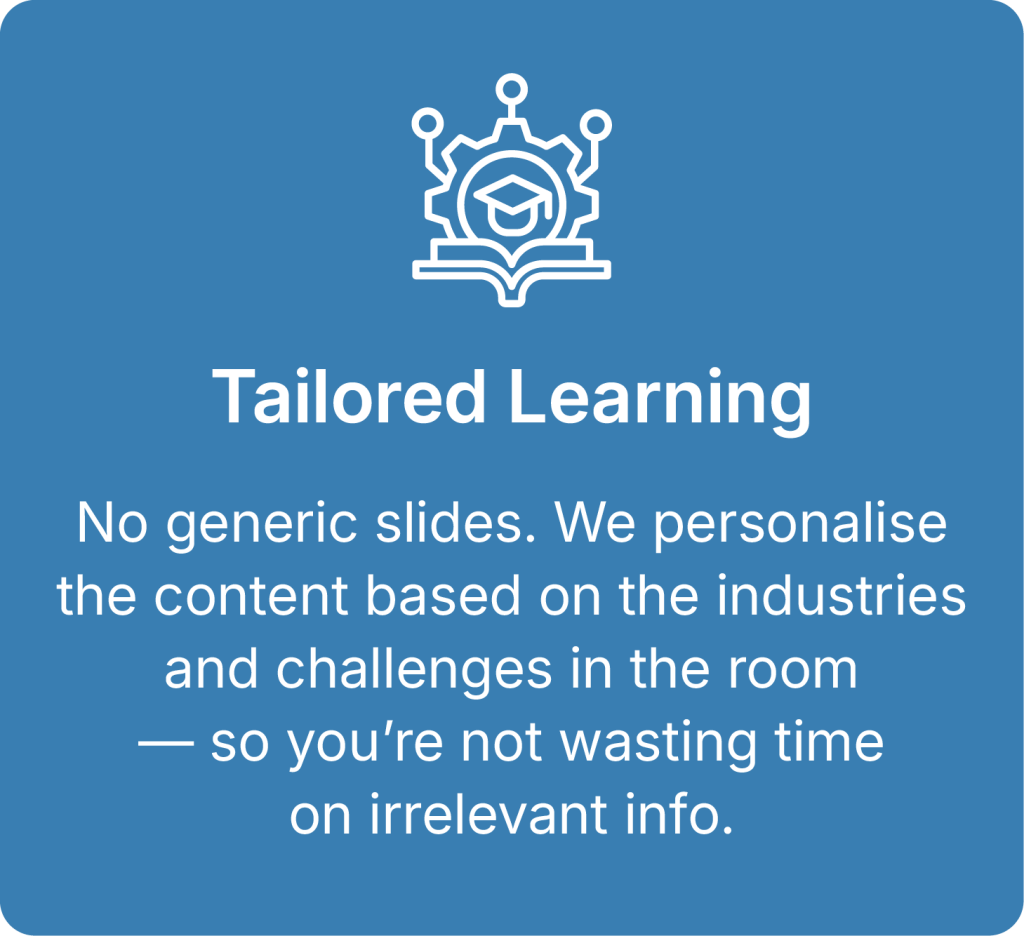
We understand that every business is different. That’s why we go beyond standard slides and scripted content.

  1. Organise Your Questions Beforehand
    Before attending, we encourage you to take time to gather and organise the questions you genuinely want answered
    — whether it’s based on your billing flow, unique scenarios, or compliance challenges.
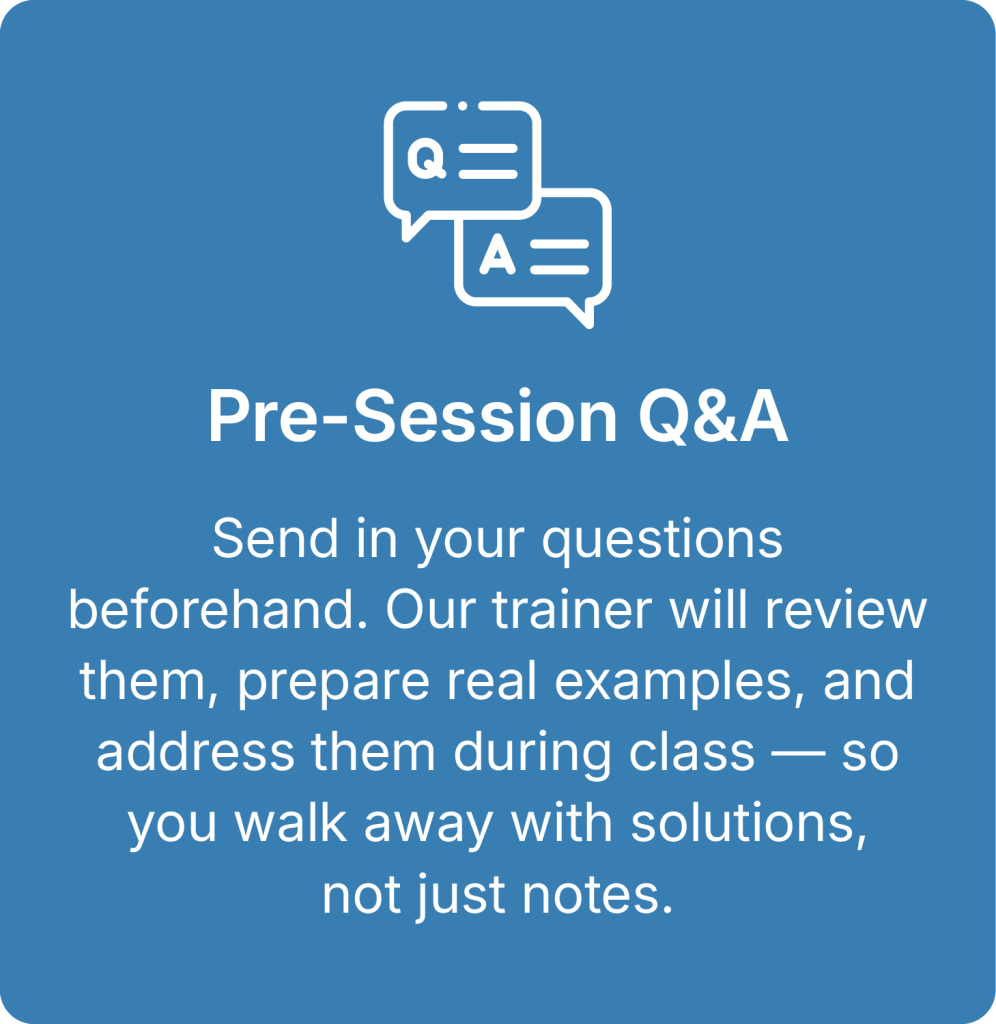
    Once you’ve compiled them, send them to us in advance. This gives our trainer time to prepare specific, relevant
    responses
    based on real guidelines and case references.

  2. More Than Just an Answer, We Explain the Reasoning
    We don’t believe in vague or surface-level replies. Our trainer will explain the why behind the rules, highlight common misconceptions, and walk you through practical ways to avoid mistakes.

  3. Walk Away With Practical, Applicable Solutions
    From edge cases in self-billed invoices to rejection errors in the LHDN system — your questions will be treated seriously. You’ll leave the room with clarity, not just notes.

Ready to Take Control of Your E-Invoice Compliance?

Whether you’re still figuring things out or already facing issues with MyInvois integration
don’t leave it to trial and error.

Seats are limited. Secure your class before deadlines catch up.

LHDN Compliance Requirements
& Grace Periods

Which Phase Are You In?
And What’s Your Real Deadline?

Most businesses already know which phase they fall under for LHDN’s e-Invoicing rollout — Phase 1, 2, or 3. However, a common and risky habit we’ve seen is treating the grace period as extra time to delay, rather than a critical opportunity to prepare.

This often leads to last-minute stress and rejected invoices. When the grace period is over, continuing to issue invoices the same old way can result in serious consequences. This isn’t just about compliance — it’s a habit that can trigger LHDN audits, leading to penalties for non-compliance.

What Early Adopters
Wish They Knew?

We’ve worked with businesses that were
among the early adopters of e-Invoicing,
and we’ve seen the pitfalls firsthand.

Real case studies include:

We’ll walk you through what happened,
why it happened, and how to avoid the
same mistakes in your company
with real case studies.

DIY Setup vs Software Support

Software is a tool
— not a solution.

It won’t interpret laws or
flag business-specific risks.
That’s where real training
makes a difference.

What Happens After
You Submit Your e-Invoicing?

Many businesses assume that once
an e-Invoice is submitted to
MyInvois,
the job is done.
✅ Submit and move on, right?

WRONG!

That’s just the beginning — and
this misunderstanding is where
most early adopters start
getting into trouble.

Why Software Alone
Isn’t Enough?

Many SMEs assume their accounting
software can “handle everything.”
But when it comes to real-world
e-Invoicing
, that assumption
can be costly.

Here's the REALITY:

🧩 Software cannot make judgment calls
— especially in complex or grey-area
scenarios.
It won’t guide you on:

That’s where our training makes the difference.

We focus on what software can’t teach you — Human Understanding of Compliance:

  • Point.png
    How LHDN interprets different types of transactions
  • Point.png
    How to resolve common rejection or cancellation issues
  • Point.png
    Real-world case studies from businesses just like yours
Software is just a tool. Knowing how to use it correctly — in line with LHDN guidelines — is where the real value lies.

When you submit an invoice to LHDN,
it doesn’t mean it’s instantly accepted.

There are real cases where invoices get
rejected due to technical errors, wrong
classification (B2B vs B2C), or issues
with customer details.

If your team isn’t trained to spot and
correct these errors, they may keep
repeating the same mistake — again
and again — during the grace period.

And when the grace period ends?
That’s when LHDN starts checking,
and that’s when penalties may apply.

Here’s what you need to know:

What If Your Client
Rejects Your Invoice?

Yes, that happens too. If the recipient
doesn’t accept the invoice or disputes
the content, it creates further
downstream issues — especially
if your team has already closed
the books or reported
the revenue.

Because e-Invoicing doesn’t just affect
your accounts department.
It can impact:

Tax Reporting
& Supporting
Documentation

How do you prove a discount?
A rejected item?
A claimable expense?

Procurement And
Sales Cycles

What happens when
a vendor invoice arrives late
or a customer cancels
after issuance?

HR Policies
& Staff
Reimbursement

For B2C transactions,
especially staff claims, how
will you handle documentation
and compliance?

Many companies are learning the hard way:
Your Software Can’t Think For You.
It won’t automatically know how to apply
the law in unique business scenarios
— especially those that fall into grey areas.

That’s why our training
focuses on more than
just the “steps.”

We help you understand how the law
applies across different departments,
how to interpret grey areas, and how to
make the right call when the system
doesn’t guide you.

Why Do We Do Small Group Classroom Training?

Tired of Fast-Paced, Generic Webinars?
You’re Not Alone.

We’ve tested both formats — and
the difference is clear:
When it comes to mastering e-Invoicing,
classroom training works better. Period.

Let’s be honest — most online sessions:

  • Stopping
    Move too fast for proper understanding
  • Stopping
    Give one-size-fits-all explanations
  • Stopping
    Don’t allow space for your real questions
Here’s what you get in our small group classroom training:

Meet Your Trainer

Real Experience. Real Answers.

Our trainer brings 25+ years of experience in:

  • Point.png
    Human Resources
  • Point.png
    Accounting & Finance
  • Point.png
    Taxation
  • Point.png
    Digital Transformation

She’s not here to read slides. They’re here to Connect The
Dots
between law, business logic, and technology, so you leave
knowing how to apply what
you learned, confidently.

Who Should Attend an
e-Invoicing Course?

We’re not here to oversell or fill up
seats for the sake of numbers. We are here
to help you send the right people,
the ones who will actually
make implementation smoother
for your company.

MUST Attend:

These roles are directly involved with
e-Invoice issuance, submission, and
correction.
They need a deep understanding of
processes, compliance risks, and how
to respond to LHDN requirements.

  • Accounts & Finance Team
    Responsible for invoice accuracy, reporting, and ensuring submissions align with tax laws.
  • Operations / Billing Staff
    Anyone involved in issuing,
    processing, or managing invoice
    must understand the end-to-end
    flow, including what can and
    cannot be included.

Strongly Recommended:

These roles don’t always handle the
system directly, but they are critical to
successful rollout and cross-department
coordination.

  • Business Owners / Directors
    (if hands-on)
    Especially important for SMEs or family-run businesses where
    decisions and reviews are
    handled at the top.

  • Department Heads or
    Key Decision Makers
    If your role involves approving SOPs, setting policy, or managing
    vendor/client relationships, you need to understand how e-Invoice will
    impact operations beyond accounting.

The Most Important Factor?

Send someone who can absorb the
information
, ask the right questions,
and later
brief your internal team
with clarity and confidence.

This is not just about attending,
it’s about bringing back value.

Q&A: Real Answers
to Real Questions

Not Just A Generic Guidelines

In large webinars or online courses, the
Q&A segment is often rushed or skipped
entirely. But in our small-group sessions,
your questions are not an afterthought,
they are a core part of the learning experience.

We understand that every business is
different. That’s why we go beyond
standard slides and scripted content.

  1. Organise Your Questions Beforehand
    Before attending, we encourage you to
    take time to
    gather and organise the
    questions you genuinely want
    answered
    — whether it’s based on your
    billing flow, unique scenarios, or
    compliance challenges.


    Once you’ve compiled them, send them
    to us in advance. This gives our trainer
    time to
    prepare specific, relevant
    responses
    based on real guidelines
    and case references.

  2. More Than Just an Answer,
    We Explain the Reasoning
    We don’t believe in vague or surface-
    level replies. Our trainer will explain the
    why behind the rules, highlight common
    misconceptions, and walk you through
    practical ways to avoid mistakes.

  3. Walk Away With Practical,
    Applicable Solutions
    From edge cases in self-billed invoices
    to rejection errors in the LHDN system
    — your questions will be treated
    seriously.

    You’ll leave the room with clarity,
    not just notes.

Ready to
Take Control of Your
E-Invoice Compliance?

Whether you’re still figuring things
out or already facing issues with
MyInvois integration
don’t leave it to trial and error.

Seats are limited. Secure your class
before deadlines catch up.

Accounts in One Logo

Copyright © 2025 Accounts In One.
All rights reserved.

Accounts in One Logo

Copyright © 2025 Accounts In One.
All rights reserved.

error: Content is protected !!
Scroll to Top